


A Noisy Reminder of Why Design Matters
The Importance of Design
During one of my recent hospital visits, I noticed a small equipment issue that got me thinking about how often the little things can make a difference in a healthcare environment.
Utility carts are used throughout hospitals every day to transport everything from IV supplies to linens. With that much use, wear and tear is inevitable. But sometimes, the effects go beyond the equipment itself.
As a staff member pushed a utility cart down the corridor, I noticed a distinct clattering noise. In a quiet hospital environment, where patients are trying to rest and recover, even these everyday sounds can become a disturbance.
I asked the biomedical engineering team about it and learned that the caster's swivel mechanism can loosen over time. Because the casters were welded to the cart frame, they couldn't be replaced.
It was a simple example of how a small design decision can have a lasting impact. Equipment isn't just about how it performs on day one. It's also about how it holds up to years of use, how easily it can be maintained, and what happens when individual components eventually wear out.
It's something worth considering when evaluating equipment. Sometimes, the details that seem insignificant at the time of purchase are the ones that matter most down the road.
Why Equipment Standardization Should Be A Priority For IDNs
For Integrated Delivery Networks (IDNs), standardizing minor capital equipment is a strategic way to improve patient safety, control costs, and drive operational efficiency across the health system.
While individual hospitals focus on day-to-day clinical operations, IDNs must consider how equipment decisions affect performance across multiple hospitals, outpatient centers, and surgical facilities. There are four key areas that demonstrate the value of minor capital equipment standardization.


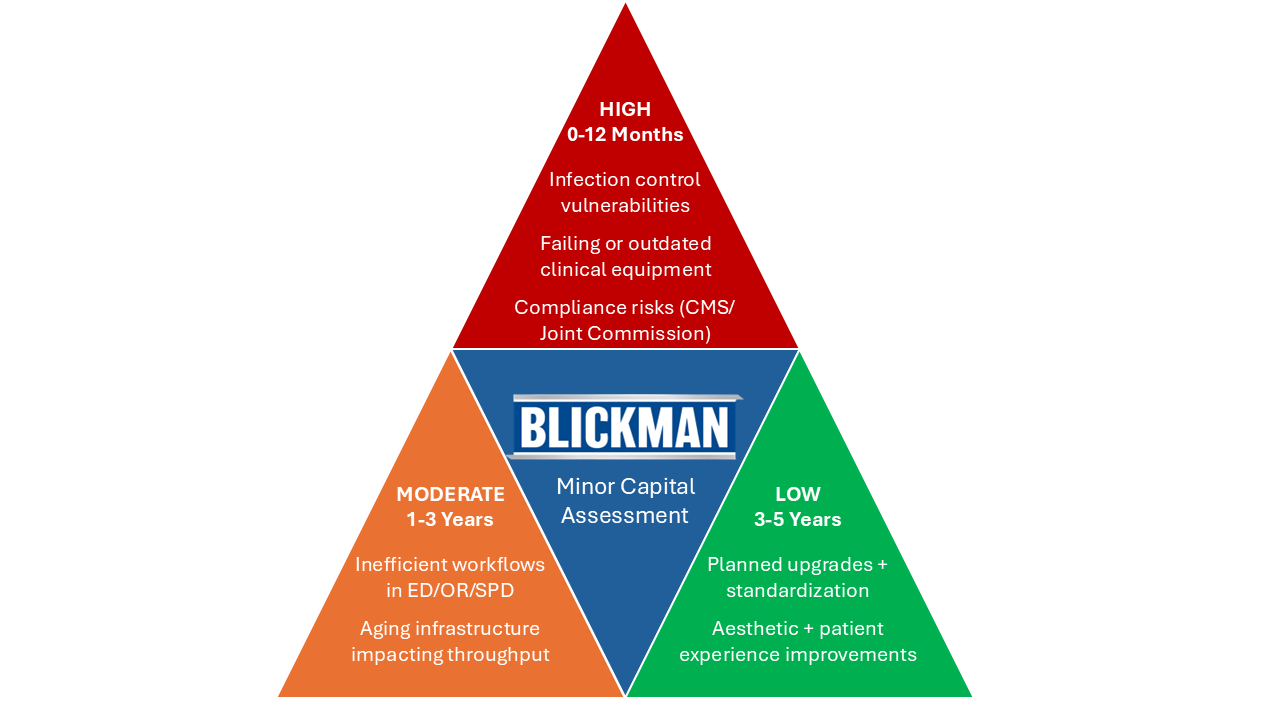
The Importance of a Minor Capital Assessment
Procuring clinical equipment across healthcare networks is notoriously complex. Mergers, acquisitions, and multi-hospital systems create fragmented management styles as well as siloed decision-making. This often leads to unnecessary product variation, hidden costs, supply chain inefficiencies in addition to biomed confusion.
Blickman’s complimentary minor capital assessment bridges these gaps to establish consistent system-wide quality standards - converting fragmented purchasing into a proactive lifecycle asset strategy that reduces off-contract spend.
Contact Linda Walther (lwalther@blickman.com) today to schedule!

The Rise of Outpatient Imaging Centers: Transforming Radiology Delivery in the U.S.
The Rise of Outpatient Imaging Centers: Transforming Radiology Delivery in the U.S.
The U.S. healthcare system is undergoing a significant transformation in how radiology services are delivered. Today, approximately 35% of imaging volume is performed in independent outpatient centers with projected double-digit growth over the next decade.
This shift is not a temporary trend. It reflects a broader movement toward decentralized care, cost efficiency, and improved patient experience.
Why Outpatient Imaging Centers Are Growing
1. Aging Population Driving Imaging Demand –as the population ages, the demand for diagnostic imaging continues to rise. Older patients require more frequent scans for chronic conditions such as cardiovascular disease, cancer, and musculoskeletal disorders.
2. Hospital Capacity Constraints and Wait Times – hospitals across the country are facing increased patient volumes and longer wait times, especially for imaging services. Emergency and inpatient cases often take priority, leaving outpatient imaging delayed. They are shifting routine imaging, MRIs, CT scans, and X-rays, to off-site centers.
3. Cost Pressures and Reimbursement Trends – outpatient imaging centers typically operate at a lower cost structure than hospitals, which translates to lower out-of-pocket costs for patients, reduced overall spend for payers and greater price transparency.
4. Patient Experience and Satisfaction – today’s patients expect convenience, speed, and comfortable surroundings. Outpatient imaging centers deliver on all three.
Supporting the Shift: The Role of Specialized Equipment
As outpatient imaging centers expand, the need for reliable, compliant equipment becomes critical to maintaining safety and efficiency. Adherence to FDA guidelines and ASTM F2503 standards is essential. These standards classify equipment as MR Safe, MR Conditional, or MR Unsafe, ensuring proper usage within designated MRI zones.
Our MR Conditional product line spans 8 equipment categories with over 40 products. Reach out to Linda Walther so she can deliver a safer, smarter equipment plan for your imaging environment.