
Why Equipment Standardization Should Be A Priority For IDNs
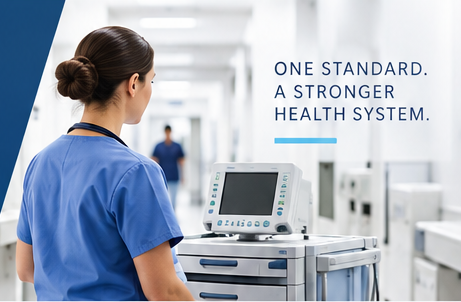
For Integrated Delivery Networks (IDNs), standardizing minor capital equipment is a strategic way to improve patient safety, control costs, and drive operational efficiency across the health system.
While individual hospitals focus on day-to-day clinical operations, IDNs must consider how equipment decisions affect performance across multiple hospitals, outpatient centers, and surgical facilities. There are four key areas that demonstrate the value of minor capital equipment standardization.
1. Clinical Risk Mitigation and Patient Safety
Clinicians and traveling nurses frequently move between facilities within an IDN. Standardizing equipment helps ensure staff encounter familiar controls, interfaces, and operating procedures regardless of location.
This consistency reduces the learning curve, minimizes the potential for user error, and allows clinicians to focus on delivering safe, effective patient care. Standardization also simplifies staff orientation and training when personnel move between facilities.
2. Supply Chain Leverage and Sourcing
Consolidating equipment selections across an IDN strengthens purchasing power and creates opportunities for more favorable pricing, consistent product availability, and long-term supplier partnerships.
Reducing the number of equipment models and vendor relationships also simplifies procurement, purchasing administration, and inventory management. Consolidated orders and deliveries can further reduce freight expenses and receiving workloads, helping lower the total cost of ownership.
3. Biomedical Engineering and Maintenance Optimization
Standardized equipment simplifies maintenance and improves service efficiency across the health system.
Biomedical engineering teams can consolidate spare parts, batteries, and replacement components, which reduces inventory complexity and makes critical supplies easier to distribute where they are needed. Standardization also allows technical expertise to be shared across facilities, streamlines preventive maintenance, and simplifies troubleshooting and repairs.
The result is a more efficient service model that can help reduce equipment downtime and extend asset life.
4. Asset Mobility and Utilization
Standardization gives IDNs greater flexibility to move equipment where it is needed most.
For example, if surgical volumes increase at one hospital while an outpatient center experiences a decline, the IDN can reallocate compatible equipment between facilities to meet changing demand. Familiar equipment also reduces the need for additional training when assets move between locations.
This flexibility helps maximize equipment utilization, reduce unnecessary purchases, and ensure capital resources are aligned with clinical demand across the network.
By standardizing minor capital equipment, IDNs can support safer clinical workflows, strengthen supply chain performance, simplify maintenance, and maximize the value of their existing assets which maintains a consistent standard of care across the network.
